

Remote Patient Monitoring Enhances Surgical Recovery
New York, Thursday, 9 January 2025.
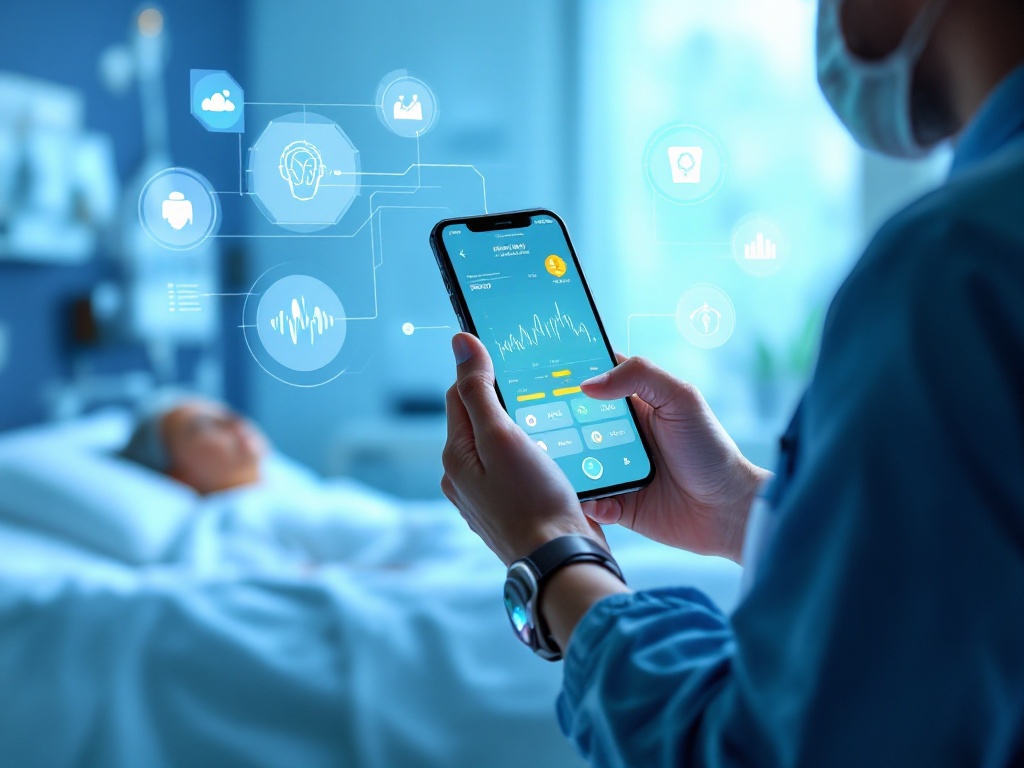
Remote patient monitoring transforms surgical care by enabling continuous tracking and early intervention, improving recovery and reducing hospital readmissions through advanced sensors and wearables.
Latest Research and Implementation
A comprehensive guide published in JAMA Surgery on January 8, 2025, outlines how remote patient monitoring (RPM) is revolutionizing surgical care through advanced technology integration [1]. The implementation of RPM systems has become increasingly feasible due to advances in consumer electronics, high-speed wireless networks, and sophisticated data analytics capabilities [4]. This transformation is particularly evident in major healthcare institutions, with Cleveland Clinic’s hospital-at-home program demonstrating significant success in patient care management, as reported in early January 2025 [2].
Technology Integration and Patient Benefits
The effectiveness of RPM relies on a comprehensive infrastructure including sensors, secure transmission systems, cloud data repositories, and dedicated monitoring centers [1]. This technological framework enables healthcare providers to track vital signs and health status continuously outside traditional clinical settings [3]. MaineHealth’s recent expansion of telehealth services, implemented in December 2024, showcases how healthcare systems are increasingly adopting RPM to improve outcomes for both acute and chronic conditions [2].
Medicare Coverage and Healthcare Economics
The healthcare landscape is adapting to support RPM implementation, with Medicare finalizing important reimbursement guidelines for 2025 [2]. Starting January 2025, new provisions include expanded definitions of ‘interactive telecommunication systems’ to include various monitoring technologies [6]. Healthcare providers can now utilize their currently enrolled practice locations for remote services through 2025, facilitating broader adoption of RPM systems [6].
Future Outlook and Clinical Impact
The convergence of RPM with artificial intelligence is positioned to significantly transform healthcare delivery [4]. Healthcare organizations are actively developing comprehensive clinical operations models to maximize the benefits of these technologies [4]. The Center for Connected Medicine’s latest report identifies RPM as reaching a critical tipping point, with potential to revolutionize healthcare delivery through improved patient outcomes and reduced healthcare costs [4].