

Taiwan Hospital Cuts ICU Deaths by 19% with AI-Powered Healthcare System
Taoyuan City, Friday, 29 November 2024.
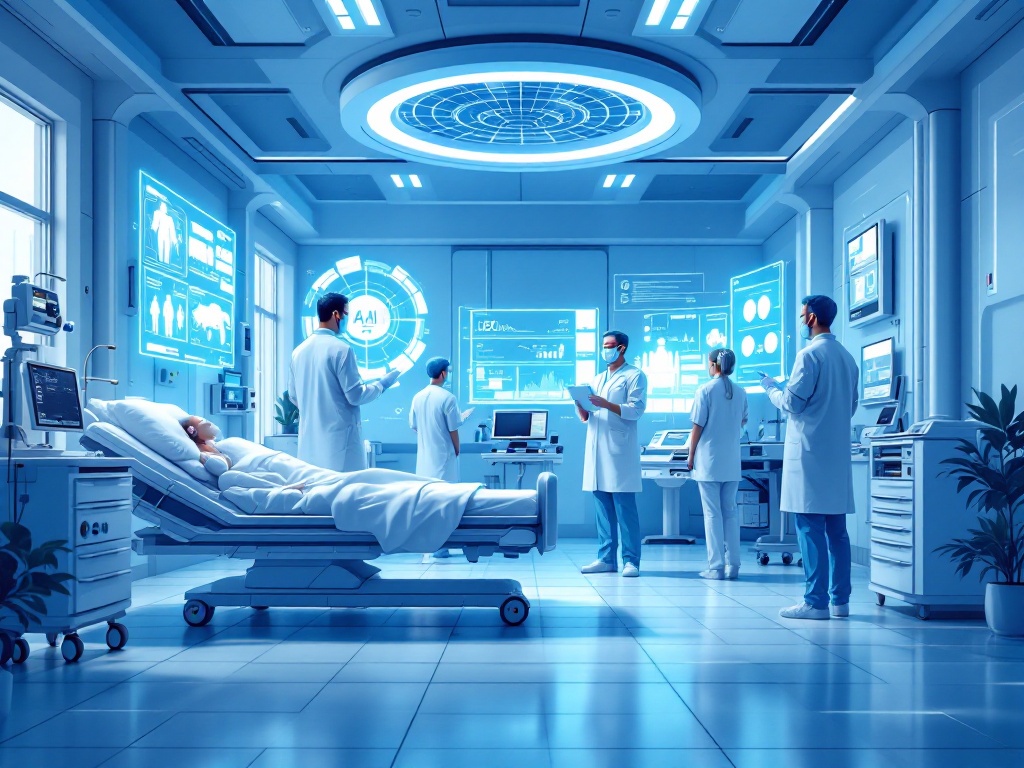
China Medical University Hospital’s groundbreaking smart healthcare system has revolutionized patient care by implementing AI-driven monitoring and predictive analytics. The hospital’s innovative ‘Smart Healthcare 4.0’ initiative, featuring real-time patient monitoring and automated systems, has not only reduced ICU mortality rates but also saved medical staff over 5,000 hours in workload. This achievement, recognized at HIMSS24 APAC, demonstrates how artificial intelligence is transforming traditional healthcare delivery into more efficient, personalized patient care models.
Advancements in AI-Driven Healthcare
At the forefront of healthcare innovation, China Medical University Hospital (CMUH) in Taiwan is pioneering the integration of AI to enhance patient outcomes. Their ‘Smart Healthcare 4.0’ initiative stands as a testament to the hospital’s commitment to leveraging technology for improved healthcare delivery. By incorporating AI-driven monitoring and predictive analytics, CMUH has succeeded in reducing Intensive Care Unit (ICU) mortality rates by 18.9%[1]. This impressive feat was showcased at the HIMSS24 APAC event in Seoul, where CMUH’s achievements were recognized on an international stage.
Technological Innovations and Strategic Collaborations
Under the leadership of Superintendent Der-Yang Cho, CMUH has introduced several cutting-edge platforms such as the ‘HiThings Tele-ICU’ and the Intelligent Anti-Microbial System (i.A.M.S.), which have collectively diminished nursing workload by over 5,000 hours[1]. Collaborations with tech giants like Microsoft and Google have facilitated the development of these smart systems, driving the hospital’s AI-powered healthcare forward. These strategic partnerships are crucial in overcoming the challenges of data integration and interoperability, as highlighted by Dr. Shih-Sheng Chang, Director of the AI Center at CMUH[1].
Long-Term Impact on Healthcare Systems
The implications of CMUH’s advancements extend beyond immediate healthcare benefits. By focusing on AI-driven solutions such as mRNA-based CAR-T immunotherapy and real-time data collection via wearable devices, the hospital is setting a new standard for personalized care. These innovations not only enhance operational efficiency but also empower physicians with the tools needed for timely and precise interventions[1]. As CMUH continues to pursue cross-border collaborations and expand its digital capabilities, the long-term impact on Taiwan’s healthcare system is poised to be transformative, prioritizing patient-centered care through highly accurate smart healthcare solutions.
Future Directions and Challenges
Despite these advancements, the journey towards fully integrated smart healthcare is not without its challenges. Data integration and interoperability remain significant hurdles that need to be addressed to fully unlock the potential of healthcare data. Dr. Shih-Sheng Chang emphasizes the importance of individualized nursing and AI-assisted remote surgeries in overcoming these barriers[1]. CMUH’s success at HIMSS highlights the necessity for continuous innovation and adaptation in the healthcare sector, ensuring that technological advancements translate into real-world improvements in patient care.