

AI Revolutionizes Early Disease Detection in Healthcare
Boston, MA, Tuesday, 11 February 2025.
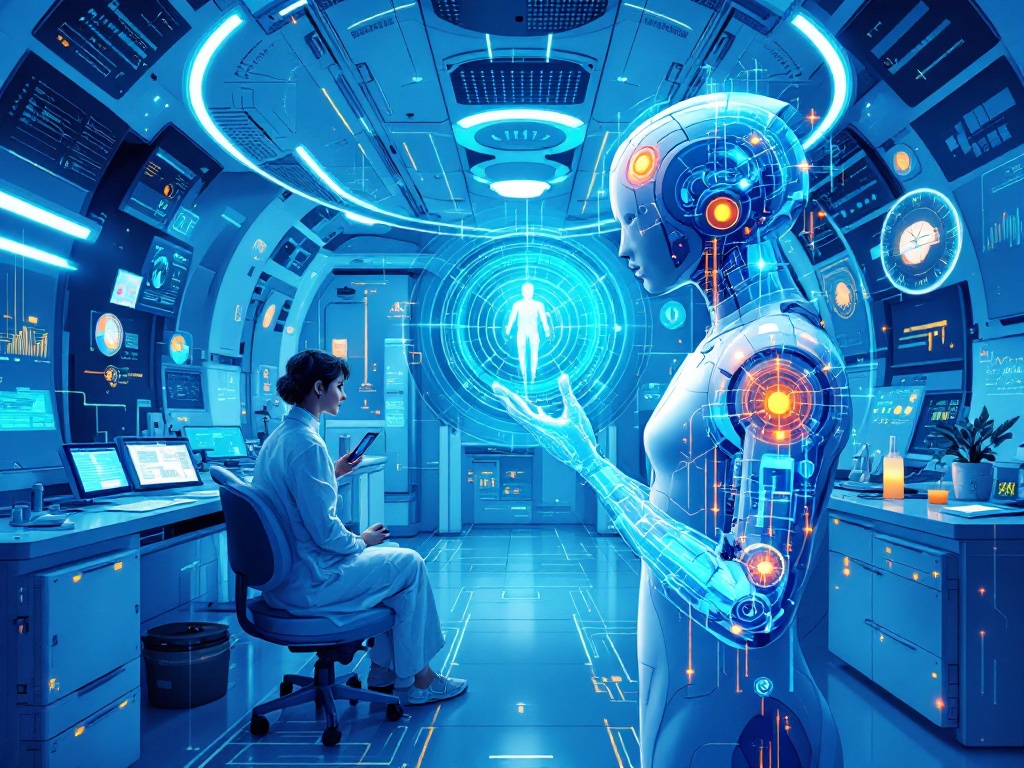
AI improves early disease detection by analyzing patient data for timely interventions, reducing costs and enhancing patient outcomes.
Breakthrough in Cancer Detection
Recent advancements in AI-powered healthcare solutions are showing remarkable results in cancer detection. Sanford Health has demonstrated that AI algorithms can identify colorectal cancer risk factors with five times greater accuracy than traditional methods [3]. Their AI model analyzes 85 variables, compared to conventional approaches that typically examine only 5 factors [3]. This innovation is particularly significant for rural healthcare delivery, where early detection can be challenging due to limited access to specialists. The technology has achieved a 12% detection rate over a six-month study involving 450,000 individuals aged 45-80 [3].
European Investment in AI Diagnostics
The European Investment Bank (EIB) is actively supporting AI-driven diagnostic innovations, as evidenced by their recent €15 million investment in Amadix for developing advanced blood tests for early cancer detection [5]. This initiative, announced on February 9, 2025, aims to revolutionize the detection of colorectal, pancreatic, and lung cancers before symptoms appear [5]. The investment is part of the broader InvestEU program, which aims to mobilize over €372 billion in investments by 2027 [5], demonstrating a strong commitment to advancing AI-powered healthcare solutions.
Neurological Applications and Mental Health Monitoring
AI is making significant strides in neurological diagnostics, particularly in early detection of conditions like autism and mental health issues. Recent studies have shown promising results using structural MRI combined with AI tools to identify early neurodevelopmental markers of autism [6]. Additionally, innovative AI-based remote monitoring technologies are being developed for mental health assessment, particularly in youth concussion patients [7]. These systems help clinicians collect and analyze patient mental health data more effectively, enabling timely interventions and improved treatment outcomes.
Future Implications and Healthcare Integration
The healthcare industry is rapidly adopting AI technologies across various specialties. Stanford Medicine researchers are at the forefront of integrating AI into biomedicine for improved disease detection [8]. The HIMSS25 Global Health Conference, scheduled for March 2025 in Las Vegas, will showcase these technological advancements [1], highlighting the growing importance of AI in healthcare delivery. These developments are particularly crucial as healthcare systems worldwide seek to enhance preventive care and reduce treatment costs while improving patient outcomes [GPT].
Bronnen
- www.healthcareitnews.com
- www.ama-assn.org
- www.eib.org
- www.emjreviews.com
- www.arxiv.org
- med.stanford.edu