

Philips and GE Revolutionize Lung Cancer Screening with AI
Global, Wednesday, 15 January 2025.
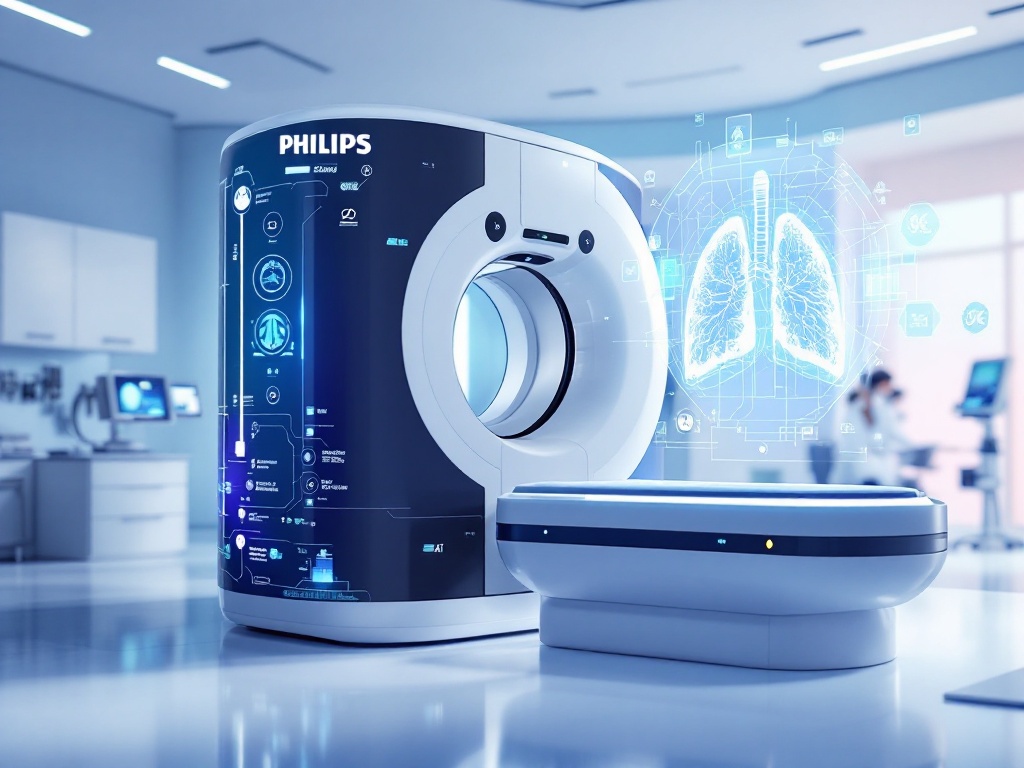
Philips and GE utilize AI to enhance lung cancer screening accuracy, promising earlier detection and streamlined diagnostics, potentially reducing the global impact of the disease.
Market Growth and Innovation
The lung cancer screening market is experiencing significant expansion, valued at USD 3.61 billion in 2024 and projected to reach USD 9.50 billion by 2035, growing at a CAGR of 9.18% [1]. This growth is primarily driven by technological advancements in AI-assisted screening tools, with industry leaders Philips and GE Healthcare at the forefront of innovation [1]. The integration of AI technology has shown remarkable improvements, with recent studies indicating a more than 30% increase in screening accuracy compared to traditional methods [1].
Regional Impact and Implementation
North America maintains the highest revenue share in the lung cancer screening market, attributed to its established healthcare infrastructure and favorable reimbursement policies [1]. Meanwhile, the Asia Pacific region is experiencing the fastest growth rate, driven by increasing healthcare investments and rising lung cancer prevalence, particularly in China and India [1]. A notable example of implementation success is Nova Scotia’s launch of a new cancer screening program in January 2024, specifically targeting high-risk individuals [1].
AI Integration and Clinical Informatics
The clinical informatics market, crucial for AI-powered screening solutions, is projected to reach USD 563.18 billion by 2030, growing at a CAGR of 16.0% [2]. This growth is supported by significant policy developments, including President Biden’s October 2023 executive order to establish AI guidelines in healthcare [2]. The World Health Organization has embraced AI technology for enhancing early warning systems and epidemic predictions, demonstrating the global shift toward AI-enabled healthcare solutions [2].
Future Outlook and Preventive Healthcare
The future of lung cancer screening appears promising with continued technological advancement and increased adoption of AI solutions. Companies like Philips and GE Healthcare are committed to expanding their AI capabilities, with projections showing a 25% annual growth rate in the AI lung cancer screening market through 2030 [1]. This transformation in screening methodology, combined with growing market investments and government initiatives, positions AI-powered lung cancer detection as a cornerstone of preventive healthcare strategies [1][2].