

Remote Monitoring Enhances Elderly Care in Winter
New York, Tuesday, 10 December 2024.
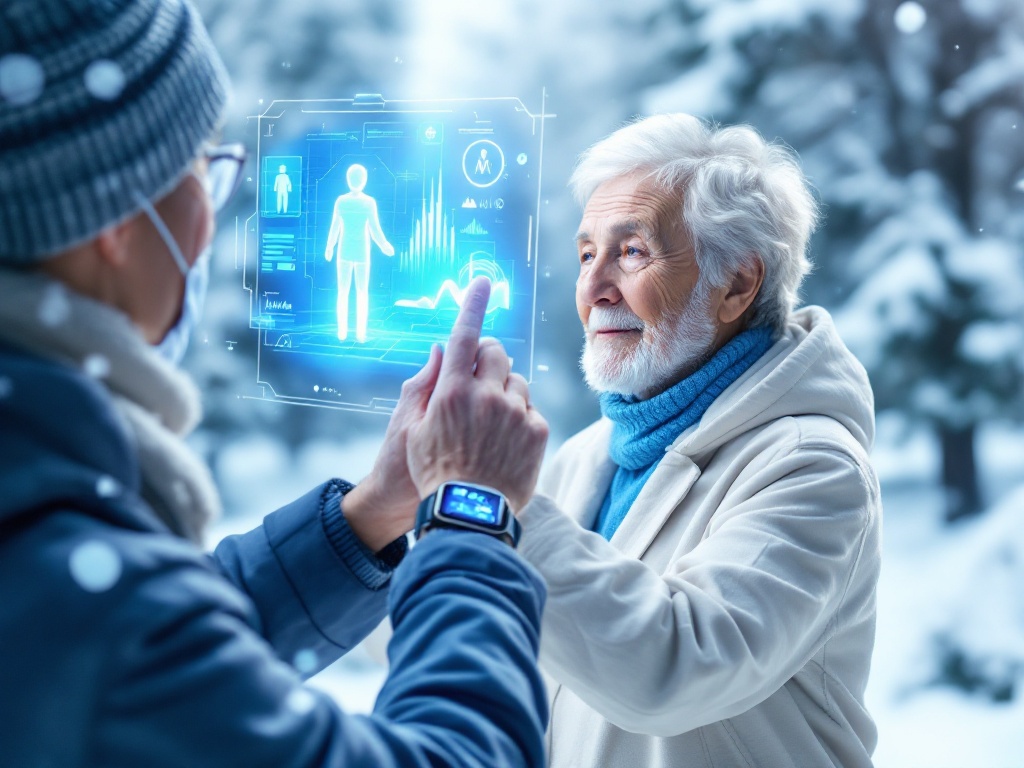
Remote patient monitoring improves elderly care by reducing seasonal illnesses through real-time health tracking and timely interventions, particularly beneficial during colder months.
Advanced Technology Meets Healthcare Needs
Recent developments in remote patient monitoring (RPM) technology are transforming elderly care, with significant breakthroughs in December 2024. A new pilot program launched on December 7, 2024, across several Midwest nursing homes demonstrates the healthcare sector’s commitment to leveraging technology for better patient outcomes [4]. This initiative builds upon impressive results from 2023, where remote monitoring systems achieved a 30 percent reduction in emergency room visits among elderly patients [4]. The implementation of these systems is particularly crucial during winter months, when seniors face increased health risks from seasonal illnesses [1].
Real-Time Monitoring and Early Intervention
The effectiveness of RPM systems lies in their comprehensive monitoring capabilities. Healthcare providers can now track vital signs 24/7, including heart rate, blood pressure, and oxygen levels, enabling early detection of potential health issues [1]. A groundbreaking study released on December 6, 2024, revealed that virtual acute care models incorporating RPM resulted in shorter hospital stays compared to traditional inpatient care [2]. This advancement is particularly significant for managing chronic conditions like heart failure, as demonstrated by UMass Memorial Health — Harrington’s RPM program, which has successfully reduced hospital readmissions [2].
Technology Integration and Accessibility
Modern RPM platforms have achieved remarkable integration capabilities, connecting with over 55 Electronic Health Records (EHR) systems and various medical devices [5]. These systems utilize AI-powered analytics for data-driven decision-making, allowing healthcare providers to identify trends and intervene proactively [5]. Recognizing that many elderly patients may not be tech-savvy, providers have prioritized user-friendly interfaces and devices [1]. The systems include specialized equipment such as spirometers for lung function monitoring, oximeters for oxygen level tracking, and thermometers for temperature monitoring [1].
Future Outlook and Expansion
The healthcare sector is actively expanding its remote monitoring capabilities. Plans are underway for a significant expansion of these programs in early 2025, targeting a 30 percent increase in coverage [2]. Recent success stories, such as the NHS pilot program initiated in May 2024, have shown promising results in reducing patient anxiety and improving health management [6]. This growing adoption of RPM technology represents a fundamental shift in healthcare delivery, particularly beneficial for elderly patients during challenging winter months [1][4].