

AI Revolutionizes Remote Patient Monitoring in Hospitals Worldwide
Global, Wednesday, 4 December 2024.
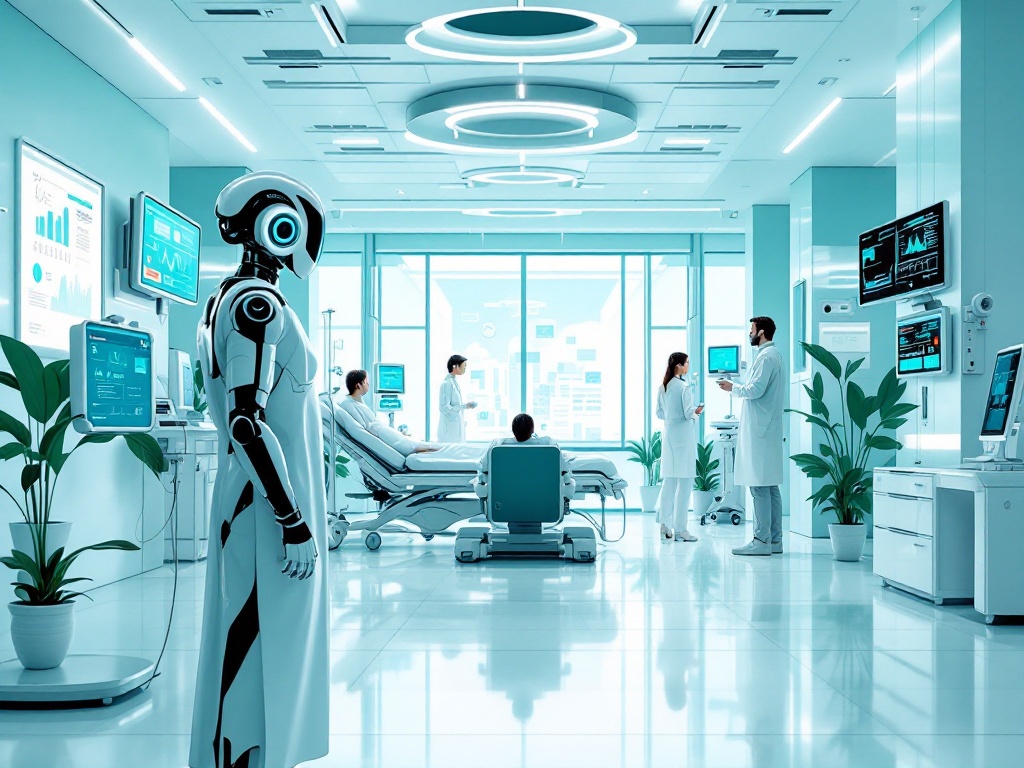
AI is enhancing patient care by expanding monitoring capabilities within hospitals, reducing the need for human sitters and enabling proactive interventions.
AI’s Growing Role in Healthcare Staffing Crisis
As healthcare facilities grapple with projected staffing shortages of 86000 physicians by 2036 and 63000 nurses by 2030[1], artificial intelligence is emerging as a crucial solution. The recent launch of Teladoc Health’s AI-powered ‘virtual sitter’ on November 29, 2024, marks a significant advancement in addressing these challenges[1]. This innovative solution employs sophisticated algorithms for motion detection and pose estimation, enabling automated patient monitoring while allowing healthcare staff to focus on critical care tasks.
Advanced Monitoring Technologies Transform Patient Care
The integration of AI in patient monitoring extends beyond basic surveillance. Companies like Care.ai are implementing ‘smart room’ technology that utilizes natural language processing and machine learning sensors to enhance patient care[1]. This technological advancement, further strengthened by Stryker’s acquisition of Care.ai in August 2024, demonstrates the healthcare industry’s commitment to AI-driven solutions. Remote cardiac monitoring, in particular, has shown remarkable progress, with AI systems now capable of detecting subtle heart rhythm variations that might precede cardiac events[2].
Real-World Impact and Clinical Applications
The effectiveness of AI-enabled monitoring is particularly evident in managing high-risk patients. Recent studies have demonstrated significant benefits in cardiac care, where AI-powered systems have helped identify and prevent stress-induced cardiovascular events[2]. In the realm of neurological care, remote monitoring platforms have shown promising results, with a recent study reporting patient compliance rates of 63.3% for daily check-ins and 85.5% for monthly surveys[4]. These developments are particularly crucial given that approximately 127.9 million US adults have some form of cardiovascular disease[2].
Future Prospects and Market Growth
The intelligent remote monitoring market is poised for substantial growth, with projections indicating an increase of USD 2.23 billion between 2024 and 2028, at a CAGR of 7.18%[3]. This growth is driven by increasing industrial remote monitoring needs and the adoption of advanced SCADA systems. As healthcare facilities worldwide continue to embrace AI-powered monitoring solutions, the technology is expected to play an increasingly vital role in addressing staffing challenges while maintaining high standards of patient care.